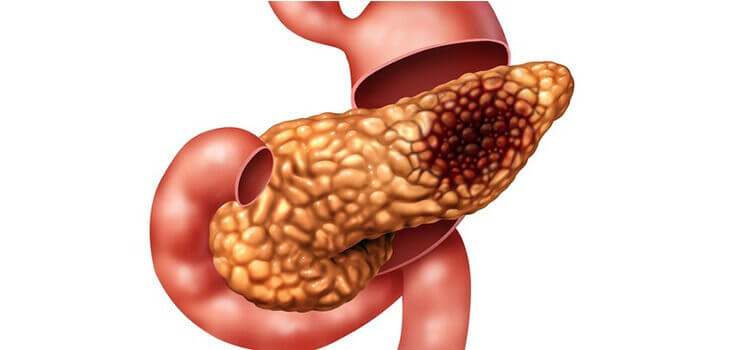
PANCREATIC CANCER
Pancreatic Cancer occurs as abnormal growth of cells in within the tissues of pancreas. Pancreas is an organ location in the abdomen behind the stomach. Its major role is to produce enzymes that help the body digest fats, carbohydrates & proteins.
Owing to the location of pancreas, pancreatic cancer is difficult to detect & is diagnosed only in advanced stages. Pancreatic cancer is classified into two types based on which function of pancreas (endocrine or exocrine) is affected.
Symptoms of Pancreatic Cancer
Pancreatic cancer does not present any symptoms until it reaches advanced stages. Some of the common symptoms include:
- Loss of appetite
- Unintentional weight loss
- Pain in the abdomen
- Pain in the lower back
- Blood clots
- Jaundice
- Depression
Are there any risk factors?
Although the exact cause of pancreatic cancer remains unknown, the scientific community has identified certain risk factors:
- Genetic Factors: An individual with certain genetic syndromes (such as breast or ovarian cancer, melanoma, pancreatitis or colorectal cancer) is at a greater risk of developing pancreatic Cancer.
- Gender: Research indicates that men are at a higher risk of pancreatic cancer compared to women.
- Exposure to toxins: Exposure to certain pesticides & chemicals can damage and affect the ability of pancreas to function normally.
- Medical Factors:
- Liver Cirrhosis
- Bacterial infections such as H.pylori
- Diabetes
- Chronic Pancreatitis
- Periodontal disease or gingivitis
-
Lifestyle Factors: Certain lifestyle factors tend to increase risk of pancreatic cancer. Some of these include:
- Smoking or Passive Smoking
- Obesity
- A diet high in red meat & fat
- Excessive consumption of alcohol for a long period of time
How is it diagnosed?
Your doctor may recommend blood tests to detect the chemical released by the cancer cells into the blood and Liver function tests to detect bile duct blockage.
Certain imaging tests may be required to identify the tumour & ascertain how far it has spread. Some of the tests include:
- Endoscopic Ultrasound
- CT Scan or PET Scan
- MRI
- X Ray
- Angiogram
A biopsy may also be recommended by the doctor to confirm the diagnosis
How is it Treated?
Treatment for any cancer depends on many factors such as:
- Type of Cancer
- Stage of Cancer
- Age & general health condition of the patient
- Patient’s choice
Chemotherapy, Radiation Therapy & Surgical intervention are the three most common treatment modalities for cancer.
For pancreatic cancer treatment, the following three surgical procedures are the most commonly used.
- Whipple procedure: This is a complex surgical procedure used when the head of the pancreas is affected by cancer. In this, the either just the pancreas head or the entire pancreas is removed along with a part of the stomach, duodenum, lymph nodes & other tissues. However, there are complications to this surgery which include infection, bleeding & problems in the stomach.
- Distal Pancreatectomy: In this procedure, a certain part of the pancreas is removed along with the spleen.
- Total Pancreatectomy: This is a procedure in which the entire pancreas & spleen are removed through surgery. Although a person can survive without pancreas, he or she is highly likely to get diabetes as the body does not produce insulin anymore.
Can it be prevented?
Risk of Pancreatic Cancer can be significantly reduced with simple lifestyle modifications:
- Risk of Pancreatic Cancer can be significantly reduced with simple lifestyle modifications:
- Maintain a healthy body weight. If you are overweight, plan for a slow & steady weight loss of half to one kilograms per week.
- Choose a healthy diet: Along with regular exercise, it is advisable to follow a diet rich in vegetables, fruits & whole grains
Pancreatic Cancer is a complicated medical condition as it does not show any symptoms and is difficult diagnose & treat. Dr Kiran Peddi, the best gastroenterologist in Hyderabad, recommends people with high risk of pancreatic cancer to undergo regular screening as early diagnosis is key to successfully treating any disease.
FAQs
Pancreatic cancer occurs when abnormal cells in the pancreas grow uncontrollably and form a tumor. It often develops silently and may not show symptoms in early stages.
Early symptoms can be subtle, but may include abdominal pain, unexplained weight loss, loss of appetite, and jaundice. Symptoms often appear as the disease progresses.
You should consult a gastroenterologist in Hyderabad if you have persistent abdominal pain, jaundice, or unexplained weight loss. Early evaluation is important for timely diagnosis.
Common risk factors include smoking, chronic pancreatitis, family history, and certain genetic conditions. Age and lifestyle factors may also increase risk.
Diagnosis usually involves imaging tests, blood markers, and sometimes biopsy. Treatment depends on the stage and may include surgery, chemotherapy, or supportive care.
Early detection is challenging, but regular check-ups and monitoring high-risk individuals can help. Healthy lifestyle choices and managing underlying conditions may reduce risk.



