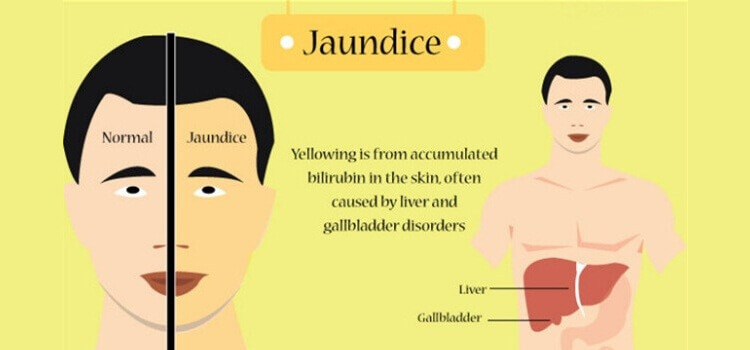
JAUNDICE
Jaundice is a medical condition in which the skin, mucous membranes & white of the eyes turn yellow. This happens when excessive bilirubin gets accumulated in the body. Bilirubin is a yellow pigment that is a result of breakdown of RBC in the liver.
Jaundice, by itself, is not a disease but it is an indication of a problem in functioning of red blood cells, liver, pancreas or gallbladder.
Types of Jaundice
Jaundice is of three main types
- Hepatocellular Jaundice is a condition in which the damage occurred in the liver cells is so severe that their ability to transport bilirubin into the biliary system is reduced. This allows some of the yellow pigment to regurgitate into the bloodstream.
- Hemolytic Jaundice appears when the quantity of bilirubin produced by breakdown of RBC in the hemoglobin is way more than the liver’s normal capacity
- Obstructive Jaundice or Cholestatic Jaundice occurs when the normal liver cells cannot transport bilirubin through hepatic-bile capillary membrane due to damage in that region or through the biliary tract due to obstructions such as cancer or gallstones.
Risk Factors of Jaundice:
- People having certain hereditary conditions are at an increased risk of Jaundice
- Excessive Consumption of alcohol can lead to alcoholic hepatitis, pancreatitis & cirrhosis resulting in Jaundice
- People at a risk of exposure to viral hepatitis such as Hepatita B or C
Certain Medical Conditions that cause Jaundice:
- Inflammation of the bile duct prevents the secretion of bile & removal of bilirubin
- Acute Inflammation of Liver can impair the ability of the liver to conjugate & secrete bilirubin
- Obstruction of bile duct prevents liver from getting rid of bilirubin
- Gilbert’s syndrome is an genetic disorder in which enzymes become incapable of processing the excretion of bile
Symptoms of Jaundice
Symptoms of jaundice may be varied depending on its underlying cause. While some individuals may show few or no signs at all, others may experience severe symptoms. Following are some of the most common symptoms:
- Pale Coloured Stools
- Dark Urine
- Severe Itching
- Vomiting
- Diarrhea
- Fever & Chills
- Rectal Bleeding
- Abdominal Pain
- Loss of Appetite
- Weight Loss
- Swelling of the legs
How is Jaundice Diagnosed?
There are many diagnostic tests to confirm jaundice. Liver Function Test is the primary test to confirm whether or not the liver is functioning well.
Certain blood tests may also be required to check the bilirubin levels & composition of the blood:
- Bilirubin Tests
- Complete Blood Count
- Hepatitis A, B & C Tests
- MRI
- CT Scan
- Ultrasound Scan
- Endoscopic Retrograde Cholangiopancreatography (ERCP)
- Liver Biopsy
In some cases, when the doctor suspects an obstruction certain imaging tests may be required:
What are the possible complications of Jaundice?
The type & severity of complications differ from patient to patient & generally depend on the cause that leads to jaundice. While some patients do not have any long term after-effects & have a successful recovery, for others Jaundice may reveal a life-threatening condition. Some of the complications include:
- Anemia
- Bleeding
- Chronic Hepatitis
- Cancer
- Liver Failure
- Kidney Failure
- Death
How is Jaundice Treated?
Jaundice itself is not a disease but a symptom of an underlying medical condition. As such, the treatment is focussed on managing the disease and not the symptom. While certain patients may require to be admitted to the hospital, others can be managed well with out patient visits.
- Limiting or completely stopping consumption of alcohol is important in patients with cirrhosis, alcoholic hepatitis or acute pancreatitis.
- Varied type of medications such as steroids are used to treat disorders leading to jaundice.
- Antibiotics may be used to treat infections that lead to jaundice.
- In case of jaundice patients with gallstones surgery & other invasive procedures may be required.
Can it be Prevented?
Some of the medical conditions leading to jaundice may be prevented with lifestyle modifications and proper care:
- Do not take medications unless advised by your doctor to prevent potential liver damage or unintentional overdose
- Avoid intravenous drug use and take precautions when working with needles.
- Avoid high risk behaviour such as unprotected intercourse.
- Consider Hepatitis A & B vaccinations
- Consume Alcohol only in moderation
- Quit smoking
FAQs
Jaundice is a condition where the skin and eyes turn yellow due to a buildup of bilirubin in the blood. It usually occurs because of liver problems, bile duct issues, or increased breakdown of red blood cells. Identifying the cause is important for treatment.
The main symptom is yellowing of the skin and eyes. Some people may also experience dark urine, pale stools, fatigue, or itching. Symptoms can vary depending on the underlying condition.
You should seek medical advice as soon as you notice yellowing of the eyes or skin. Jaundice can indicate an underlying liver or bile-related issue that needs evaluation. Early diagnosis helps prevent complications.
Diagnosis involves blood tests to check liver function and bilirubin levels. Imaging or other tests may be recommended to identify the cause. The evaluation depends on symptoms and medical history.
Yes, treatment depends on the underlying cause such as infection, liver disease, or blockage. Managing the root condition usually resolves jaundice. Early treatment improves outcomes.
Yes, jaundice is often associated with liver conditions, but it can also occur due to bile duct problems or blood disorders. A proper evaluation helps determine the exact cause.



