PRIMARY SCLEROSING CHOLANGITIS
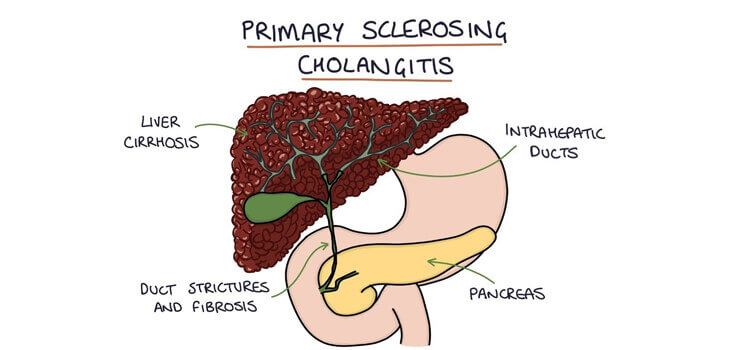
Primary Sclerosing Cholangitis (PSC) is a chronic medical condition which leads to damage of the bile ducts. Bile ducts carry bile, a digestive juice produced in the liver, to gallbladder and small intestine.
In PSC, inflammation occurs in the bile ducts leading to formation of scars making it difficult for the bile to flow through. This can cause build up of bile in the liver & lead to cirrhosis & eventually liver failure. Primary Sclerosing Cholangitis can occur in any age. However, it is more common in adults & in men.
What are the Symptoms?
Early signs of PSC include:
- Weakness & fatigue
- Itchy skin
- Dry eyes
- Dry mouth
As the disease progresses, the patient may experience the following symptoms
- Pain in the abdomen
- Swollen feet & ankles
- Hyperpigmentation
- Bone /Joint pain
- Bloating
- Diarrhea
- Pale bowel movements
- Mood swings
What are the causes & risk Factors?
The exact cause of why PSC occurs is unclear. It may be linked to a viral or bacterial infection that triggers the disease in individuals who may be genetically predisposed to this condition. Research indicates that people with PSC tend to have inflammatory bowel disease, primarily ulcerative colitis in most cases.
Risk factors of primary sclerosing cholangitis are:
- Age : This disease is more common in people under the age group of 30 to 50 years
- Gender : PSC is more common in men
- Inflammatory Bowel Disease : Most patients with PSC tend to have IBD
What are the Symptoms?
- Liver Failure: Chronic inflammation of Bile ducts which occurs in PSC can lead to liver scarring or cirrhosis and irreversible damage to liver cells
- Persistent Infections: Risk of infection is high when the flow bile is slowed down or stopped due to scarring of the bile ducts
- Portal Hypertension refers to high pressure of blood in the portal vein
- Osteoporosis is a common complication in case of PSC. However, calcium and vitamin supplements may be prescribed by your doctor to prevent bone loss
- Bile Duct Cancer: Patients with Primary Sclerosing Cholangitis are at a higher risk of developing bile duct or gallbladder cancer
- Colon Cancer: Research suggests that patients with PSC & IBD have a higher chance of developing colon cancer
How is it diagnosed?
- Liver Function Tests to check for liver enzymes
- Magnetic Resonance Cholangiopancreatography (MRCP) of the bile duct
- Endoscopic retrograde cholangiopancreatography (ERCP)
- Liver Biopsy
How is it treated?
Treatment for PSC involved managing & controlling the symptoms, monitoring the function of the liver. The doctors may also recommend certain procedures to unblock the bile duct. These include:
- Balloon Dilation: This procedure may be adopted to unblock the bile duct and ensure smoother flow of bile. In this procedure an endoscope is inserted into the blocked bile duct with an inflatable balloon at its tip.
- Stent: A small plastic tube known as a stent is placed in the blocked bile duct to hold it open. This is done through an endoscope.
- Liver Transplant is recommended in serious cases.
How is it diagnosed?
The doctor would first check for family history of hemochromatosis. He would then do a physical examination before recommending the following tests
- Blood Tests to measure the amount of iron in the blood (Transferrin saturation & serum ferritin)
- Liver Function Tests to check the extent of liver damage
- MRI to check the level of iron in the liver
- Liver biopsy to check for presence of iron and damage to the liver
If a person is diagnosed with PSC, the following measures can help ease symptoms and prevent complications
- Cut down on Alcohol
- Get Vaccinated for Hepatitis A & B
- Keep away from chemical toxins
- Maintain a healthy diet & weight
- Take medications only as recommended by your doctor.
FAQs
Primary sclerosing cholangitis (PSC) is a chronic condition that causes inflammation and scarring of the bile ducts. This affects bile flow and can gradually lead to liver damage over time.
Early stages may have no symptoms, but common signs include fatigue, itching, and jaundice. As the condition progresses, patients may experience abdominal discomfort and recurrent infections.
You should consult a gastroenterologist in Hyderabad if you notice persistent itching, yellowing of the skin, or abnormal liver test results. Early evaluation helps manage progression and complications.
The exact cause is not fully understood, but PSC is often linked to immune system dysfunction. It is also commonly associated with conditions like inflammatory bowel disease.
Diagnosis typically involves blood tests, imaging of bile ducts, and sometimes endoscopic procedures. Treatment focuses on managing symptoms, monitoring liver function, and preventing complications.
While PSC is a long-term condition, regular monitoring and medical care can help manage symptoms and slow progression. Early diagnosis plays a key role in improving outcomes.



